Hydrostatic pressure
Water pushes with weight — at 2 m depth already 200 g/cm². Classic pool paints come off at the deep line first, then the problem spreads upward. The coating peels off in strips.
RUBBERPAINT
local_shipping
Free shipping from €199,00
trending_up
Only €199,00 until free shipping!
check_circle
Free shipping unlocked! 🎉
bolt
Shipping in 24 h after payment
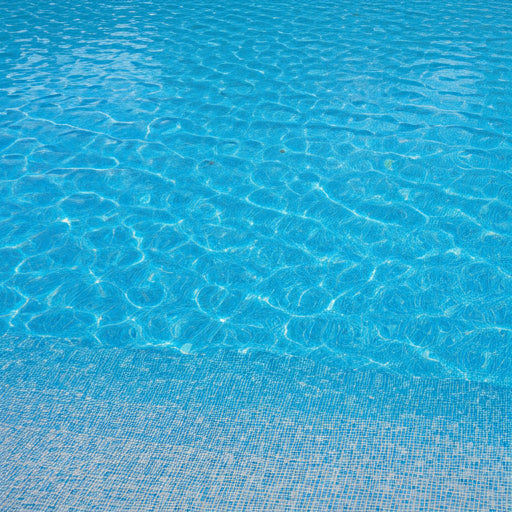
Elastic protective and decorative coating for concrete swimming pools — UV-stable, with smooth easy-to-clean surface. Suitable as an additional protective layer over existing primary waterproofing. Direct on prepared concrete, no specialist pool contractor needed.
Liquid rubber pool coating seals concrete, steel and polyester pools seamlessly, and stands up to chlorine. The elastic membrane bridges settlement cracks and copes with freeze-thaw cycles. Apply in 2–3 coats by brush or airless spray; the pool can be filled with water after 28 days of curing.
A pool is one of the toughest applications around — permanent water load, chemicals, UV. The wrong material is unusable in 2–3 seasons. Refurbishment costs a fortune once a specialist firm has to come in.
Water pushes with weight — at 2 m depth already 200 g/cm². Classic pool paints come off at the deep line first, then the problem spreads upward. The coating peels off in strips.
Free chlorine (0.5–3 mg/l standard for swimming pools) is a strong oxidiser. Standard enamels are attacked, discolour, become brittle. After 1–2 seasons cracks and discolouration are visible.
Micro-fine cracks or a rough surface give algae a foothold. Once established, they are hard to remove — the pool turns green, water must be fully changed. A smooth, sealed surface is essential.
Suitable with standard pool care (free chlorine < 1.5 mg/l, pH 6.8–8.2). Also in salt-electrolysis pools with well-maintained water chemistry. With aggressive chemicals or permanent over-chlorination the coating can be attacked.
Elastic acrylic coating as an additional protective and decorative layer over an existing, properly executed primary pool waterproofing. Follows thermal movements of the substrate without cracking.
Algae have nothing to cling to. Clean with a pool brush and a standard cleaner — no rough surface for dirt to settle into.
Stays flexible and elastic in direct summer sun. Unlike traditional pool paints, which go brittle under UV and need replacing after 3 years.
A dry substrate is essential.
Fully drain the pool, let dry — at least 7 days in sunny weather, longer if cloudy. Use a pressure washer to remove algae, limescale and old coating residue. Mechanically loosen any peeling areas, close cracks > 1 mm with concrete repair mortar and let cure for 7 days.
For old, defective coating we recommend removing completely down to solid concrete — half measures ruin the result.
Pro tip: Have the residual moisture of the pool concrete measured with the carbide method — moisture below 4 % is essential, otherwise layers come off later under water pressure.
Stabilise absorbent pool concrete.
Pool concrete is highly absorbent after cleaning. Apply deep primer, let dry for 24 h. This reduces first-coat consumption and significantly improves adhesion. For pools with old, defective coating, strip down to concrete first, then prime.
Apply deep primer thinly — a thick coat forms glossy spots that later fail under water pressure.
Pro tip: On very porous or cracked pool concrete: first apply a repair-mortar slurry as an equaliser, then deep primer — you get a perfectly prepared surface.
Diluted with up to 5 % water (up to 10 % with airless sprayer).
Diluted with up to 5 % water (up to 10 % with airless sprayer). Brush and lambswool roller. Consumption 200–250 g/m² (pool concrete is highly absorbent). Particularly careful on floor-to-wall transitions, at inlet jets and skimmer connections — these detail points demand gapless coverage.
Pool coating must be perfect — gaps or pinholes become leaks under water pressure.
Pro tip: At floor-to-wall transitions embed polyester fleece (60 g/m²) into the wet coat — prevents cracks from settling movement of the pool shell over the years.
Undiluted after 24 h of drying.
Undiluted, cross to the first coat. Consumption 150–200 g/m². Let dry until fully sealed — for pool application at least 8 h, ideally overnight. Wait longer in cooler weather or high humidity.
The coat must no longer be tacky to finger pressure and leave no impressions.
Pro tip: Cover the pool during work — prevents pollen, dust and insects landing in the wet coat, which would remain permanently visible under water.
Reinforcement for high-load zones.
Third coat at the deep line (lower 60 cm), transitions to jets, skimmer and steps. Reinforces the most heavily loaded zone, prevents delamination at key points. Consumption 100–150 g/m². Allow full cure — minimum 14 days before water filling, 28 days for full load capacity.
Before filling, sweep the pool thoroughly — dust and insects would remain permanently visible under water.
Pro tip: Fill the pool slowly the first time (over several hours) — hydrostatic pressure builds gradually and the coating can adjust, instead of being loaded all at once.
Pool coating requires three coats instead of the usual two. Apply the third coat especially in the deep line and at inlet/outlet jets. Fill with water no earlier than 14 days after full curing, ideally after 28 days. IMPORTANT: RubberPaint is intended as an additional protective and decorative coating — a suitable primary pool waterproofing must already be professionally installed.
Enter your area and desired number of coats — we recommend the optimum tub combination.
Standard: 2 coats. 3 for heavily exposed surfaces.
Consumption: 170 g/m² per coat. +10 % buffer for offcuts and uneven surfaces. For larger projects (> 80 m²) contact us for individual advice.
Recommendation
—
Calculating…
Free shipping from £170 — review your basket after adding.
Light blue and dark blue make water look clearer and deeper — the pool classics. Light green for a tropical feel, white for maximum brightness, grey for modern architectural pools.


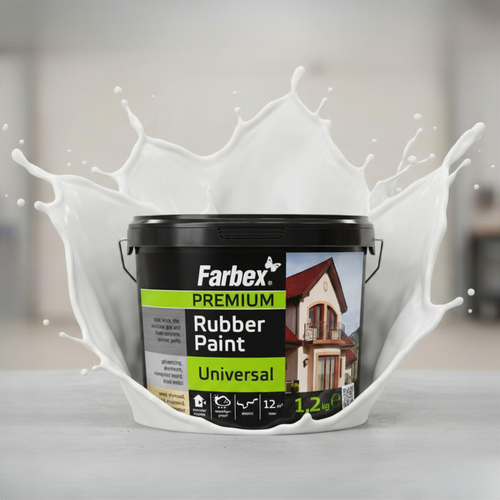
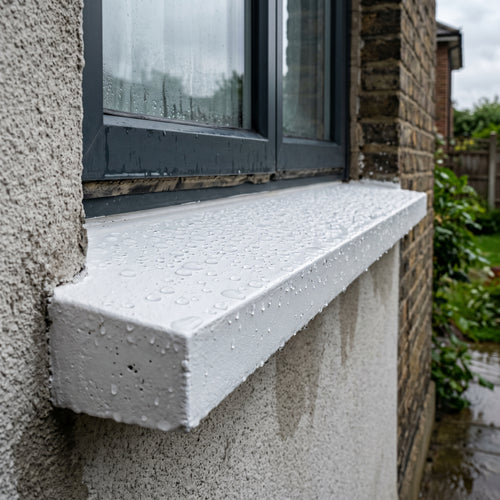


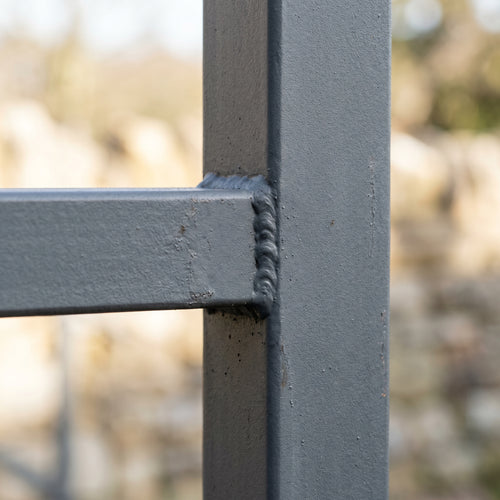
Important before you buy: liquid rubber / liquid rubber paint is not a substitute for chlorine-resistant pool liners. For fresh-water and rainwater basins, water play features and ornamental ponds, however, it is an elastic, waterproof solution.
Suitable for:
Not suitable for:
In fresh-water and rainwater basins, liquid rubber (also called rubber paint, rubberised paint or flexible coating) forms an elastic, waterproof membrane on concrete. It moves with the substrate (freeze-thaw, soil pressure) without cracking. We recommend 3 coats and full curing for 28 days before filling.
For 3 coats on concrete: 0.5 kg/m². For a 25 m² natural pond ≈ 13 kg (2 × 6 kg + 1 × 3.5 kg).
Green (RAL 6005) for natural ponds (it blends in with algae tones), Grey (RAL 7046) for modern concrete pools, Black (RAL 9005) for water surfaces that look deep.
We do not recommend it. Chlorine attacks acrylic latex over time. For pure fresh-water or rainwater basins: yes.
In a fresh-water pool: at least 7 years. Longer with frequent water changes.
Yes — with quartz sand worked in it becomes slip-resistant (R10–R11). Plain, the surface is slippery when wet.
Washable with water and mild cleaners (wet-scrub class 1 to EN 13300). No aggressive chemicals.
Ready to start? Choose your colour and tub size.
Go to the shop → · Application overview · FAQ
Related terms: Our product is sold in DIY stores and the trade under several names — liquid rubber, liquid rubber paint, liquid membrane, rubber paint, rubberised paint, flexible coating, elastic exterior paint or polymer coating. They all mean the same product: a waterproof, highly elastic coating based on acrylic latex.
The same elastic liquid-rubber coating for many more applications — explore all use cases.

waterproof

paint

waterproof
waterproof

Exterior paint

paint
Rust protection
Coating
Our technical team advises on complex applications, substrate analysis and film-thickness calculation.